

THE NATIONAL PRAYER ALTAR
MARATHON PRAYERS
Monday 12th – Sunday 18th Oct. 2026
INVASION FROM HELL
Therefore my people are gone into captivity, because they have no knowledge: and their honourable men are famished, and their multitude dried up with thirst. Therefore hell hath enlarged herself, and opened her mouth without measure: and their glory, and their multitude, and their pomp, and he that rejoiceth, shall descend into it. Isaiah (5:13-14).
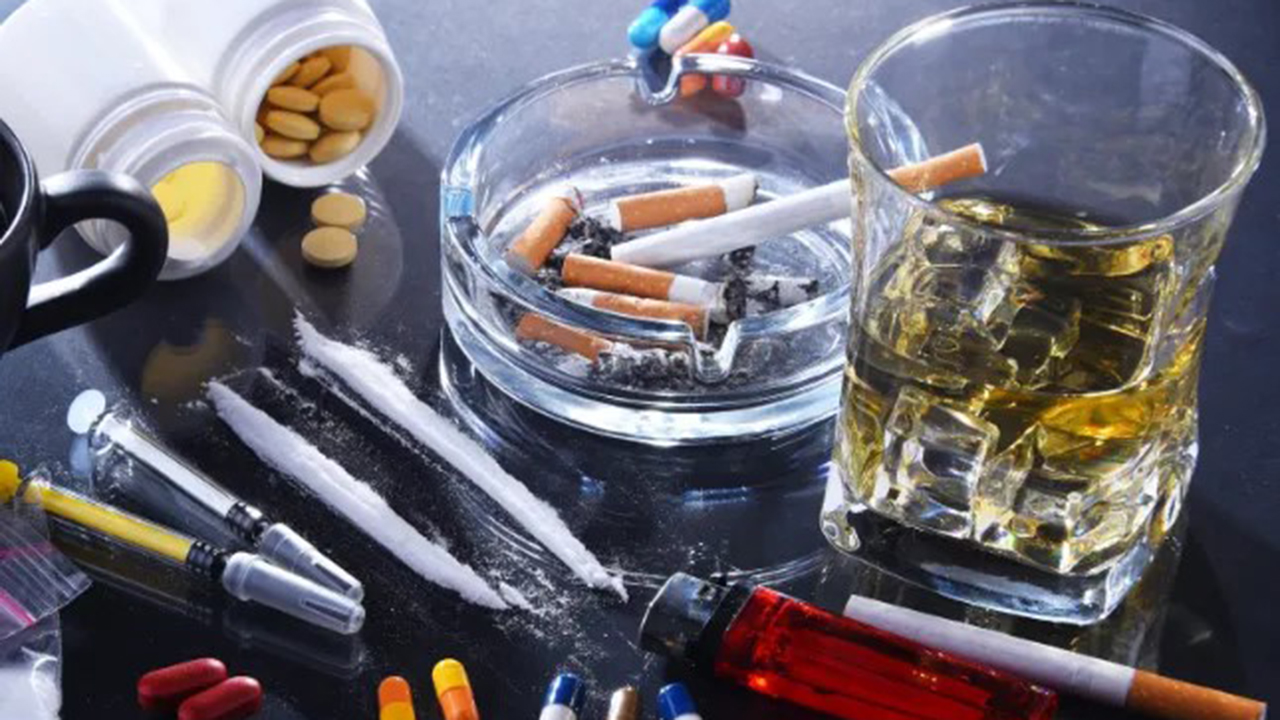
An epidemic is ravaging Nigeria, and it is worse than corruption and terrorism. It is worse because it enters the most sacred of places and penetrates the inner recesses of families. It is the scourge of drug addiction. Many Nigerians are aware of it, but only a few have properly considered its impact on the country. Many acts of criminality, immorality, and corruption in the country are the consequence of drug addiction. An alarm was raised about this scourge in a publication in 2012 entitled “Invasion from Hell”. The Nigeria Governors' Spouses Forum in February 2024 called for a state of emergency on substance abuse and illicit drug trafficking, including increased rehabilitation programmes addressing physical and mental health and recovery.
The scale of recent seizures of drugs illustrates the problem. In 2024, the NDLEA reported an interception of 31.1 million pills/bottles of tramadol and codeine-based syrups at Lagos and Port Harcourt ports. In November 2025, it reported dismantling a Lagos opioid warehouse containing more than 7.2 million tramadol tablets and 526,200 bottles of codeine syrup, which the agency valued at over ₦6.7 billion. Added to this cocktail of death is the arrival of methamphetamine (meth) in Nigeria. Methamphetamine is one of the most dangerous addictive stimulant drugs in the world. It can damage the brain and heart, trigger severe psychiatric disturbances, destroy family relationships and, in some cases, cause death. Its danger lies in its powerful effects on the brain, its high potential for dependence, and the damage that can accumulate even in people who initially believe they are using it recreationally.
The United Nations Office on Drugs and Crime (UNODC) documented 18 laboratories of methamphetamine dismantled in Nigeria between 2011 and 2019. The NDLEA has since dismantled four new laboratory operations in Ogun, Oyo and Enugu, as well as an operation involving a suspected facility in Ebonyi between 2025 and 2026. At some of the drug laboratory sites, Mexican nationals were arrested, indicating that Mexican drug cartels are beginning to enter the Nigeria market. It is safe to report that at least 23 methamphetamine laboratory sites have been documented in Nigeria according to reports spanning 2011–2026. They are the laboratories discovered. Only God knows how many are yet to be found.
Due to the culture of data deficit in Nigeria, the most reliable data on drug addiction in the country is a study conducted in 2018 by the NDLEA in collaboration with the UNODC. There are no current nationwide studies on the scourge. The 2018 National Drug Use Survey remains the most comprehensive national baseline. It surveyed all 36 states and the FCT, covering 38,850 households and more than 9,300 problem drug users. It estimated that 14.4% of Nigerians aged 15–64 (about 14.3 million people) had used a psychoactive drug other than alcohol or tobacco during the preceding year. Cannabis usage was put at 10.6 million users, Opioids (tramadol, morphine etc.) at 4.6 million users, Codeine cough syrups at 2.4 million, Cocaine at 100,000, and Heroin at 87,000 users. It is not impossible that the figures have substantially increased from the 2018 baseline.
Our objectives in running this edition are as follows:
1. To awaken Christians to the grave danger the nation in general, and families in particular, are facing from the drug invasion, and to mobilize them to pray against the satanic forces that want to undermine the foundations of the society.
2. To spur Christian parents to dedicate more time and attention to the growth of their children. Most parents have abdicated that responsibility to teachers, TV, and the social media.
3. To encourage parents to monitor the friends that their children keep. It is rare for anyone to become an addict by going to the market to buy hard drugs. In almost all the cases encountered, it is always a friend or an acquaintance that introduced them to the drugs.
4. To mobilize Christian assemblies in Nigeria to use the pulpit to warn and enlighten Christians about the dangers of drug addiction as well as the mode of operation of drug addicts. This should be done regularly, on a monthly basis, until every Christian in Nigeria is well informed about the dangers of drug addiction and how to avoid becoming an addict.
5. To impress on every Christian denomination and ministry the need to either establish Christian Rehabilitation Centres or generously support existing ones so that more care and deliverance can be made available to those already ensnared in drug addiction.
6. To put Christian pressure on the government to strengthen legislation against drug trafficking as well as massively fund and equip the Agency established to fight drug trafficking in the country.
7. Eradicate the culture of drug abuse in Nigeria.
In recent years, focus has shifted from the scourge of drug addiction to the violent operations of religious extremists in the country. Meanwhile, there is a nexus between drug addiction and the escalation of violent crimes in Nigeria. If the scourge of drug addiction is mitigated, the incidences of violent crimes in Nigeria would significantly reduce. The NDLEA has argued that drug trafficking and consumption intersect with kidnapping, banditry, terrorism and other criminal enterprises, particularly because criminal networks can use drugs to finance their operations and because some perpetrators are themselves involved in substance abuse. It may be incorrect to say that drug use causes terrorism or kidnapping generally. The relationship is more complicated: drugs can provide financing, criminal networks can facilitate trafficking, and substance use can contribute to particular forms of violence and criminal behaviour.
There is a particularly worrisome dimension for internally displaced persons and communities affected by the insurgency in Nigeria. A UNODC study found substance use prevalence of about 25% among people studied in IDP camps, compared with the 14.4% national figure from the 2018 survey. Researchers associated this with factors including trauma, poverty, unemployment, inadequate security, and availability of substances. A person displaced by terrorism may first become a victim of violence, then experience trauma and unemployment in an IDP camp, begin using substances to cope, develop dependence, and eventually experience another layer of social and economic vulnerability. It is a vicious circle.
The easiest way of tacking this menace is for the government to increase youth employment. Drug-threat assessment by stakeholders identified reduction of youth unemployment as the single most frequently recommended measure for preventing and controlling illicit drug trade, followed by public enlightenment, rehabilitation and intelligence-led policing. Sadly, the opposite measure is what the government seems to have adopted. It is not unusual in most major towns to see able bodied young men extorting money from motorcyclists and tricyclists. Their scruffy appearance, and tout-like comportment does not require any introduction that these are drug infested individuals. Under the guise of generating revenues for Local Governments and collection of dues for National Union of Road and Transport Workers (NURTW), Nigerian youths with glorious potentials are turned into touts and thugs. Chief Obafemi Awolowo and other national fathers ran government differently. They gave the children and the youths free education. They did not expose them to drug addiction. No one reading this prayer call would pray that his son would be like one of those unfortunate youths.
It is more appropriate for governments to established skill acquisition centers in all the Local Government Areas and train many of these youths in viable professions. Others could be drafted to the farm. A comprehensive program of youth employment would take these youths off the streets and reduce their likelihood of remaining drug addicts.
While politicians in government have a different focus about governance, the Church must continue the ministry of Jesus "who went about doing good, and healing all that were oppressed of the devil" (Acts 10:38). Christians should realize that drug addition has entered the Church and some of Christian youths have been ensnared. Between 2019 – 2026, there were at least ten media-reported cases of a son killing his father while under the influence of drugs. Those drug-induced homicide occurred in Kaduna, Ogun, Lagos, Delta, Ondo, Imo, Rivers, and Adamawa states. Most of those youths are Christians. It has entered the Church.
Under the circumstances, Church leaders should begin to pay attention to the menace of drug addiction in Nigeria and commence proactive measures to curtail and eradicate it. There are three recommendations that this prayer call shall give to the Church:
1. Churches must embark on consistent prayers, intercessions, as well as spiritual warfare against drug addiction in the nation.
2. Churches must embark on consistent Drugs Demand Reduction (DDR) campaign. At least once in a month, each local assembly should sensitize members of the church to the dangers of drug abuse.
3. Churches must financially support existing Christian Rehabilitation Centres as well as establish more Rehab centres. Each denomination can endeavour to establish at least one rehabilitation centre.
God bless Nigeria. Amen.
PRAYER POINTS
1. Job 39:13-17
Repent on behalf of this generation for parental carelessness in bringing up children.
2. Mal. 2:15
Confess the failure of this generation to give God a “godly seed”.
3. Is. 49:24-26
Pray for God’s divine intervention for the deliverance of youths ensnared by the devil in drug addiction.
4. Is. 54:13
Pray for God’s grace to rest upon Nigerian youths that they shall be taught by the Lord.
5. Joel 2:28-29
Pray for an outpouring of Holy Spirit upon “the sons and daughters” of Nigeria.
6. Ps. 11:6
Pray for God’s judgment upon all the drug barons and their couriers.
7. Is. 32:1-2
Pray for God’s righteous king to reign in Nigeria. AMEN

